Insects are the future.
Sooner, rather than later, insects will become an integral part of our daily lives. In some regions of the world, particularly in south-east Asia, insects have always been part of the menu, and eating spiders or insects like wasps, ants, locusts and grasshoppers are common. And if you think about it, insects are by far, a more sustainable food source than things like beef, chicken, fish, etc...
Today however, I want to highlight something that I find really interesting and aesthetically beautiful: insects in fashion.
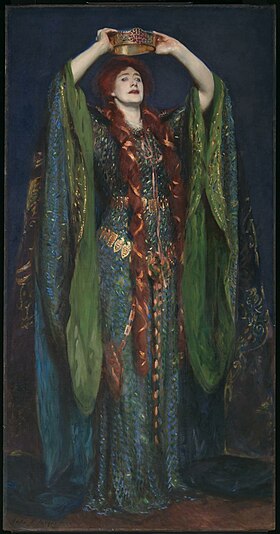 |
| Ellen Terry as Lady Macbeth image via Wikipedia |
It's not a new idea by any stretch, as seen in the painting by John Singer Sargent (1889) entitled Ellen Terry as Lady Macbeth. The painting depicts the actress performing William Shakespeare's, Macbeth, wearing a green costume dress that was decorated with iridescent beetle wings. Sounds wild, but beetle wing textile goes back far before the 1800's. For example in the 16th century during the Mughal era, beetle wings were treated like jewels and were integrated into sashes, scarves, turbans, and other costume accessories.
 |
| Madecassia rotschildi image via Wikipedia |
 |
| Temognatha alternata, image via Wikipedia |
But the term beetle 'wing' is incorrect. In textile fashion, it's not the wings (which are thin, transparent and very fragile) that are harvested. Instead, it's usually the hard and often iridescent elytra that is used. The elytra is the hard covering that protects and covers the insect's wings when they are not in use. Most of the time, beetles in the family Buprestidae, commonly called the "metallic wood-boring beetle" or "Jewel beetle" are used. It's one of the largest families in the insect world and boasts some 15,000 species known in about 450 genera.
 |
| Eurythyrea austriaca image via wikipedia |

